
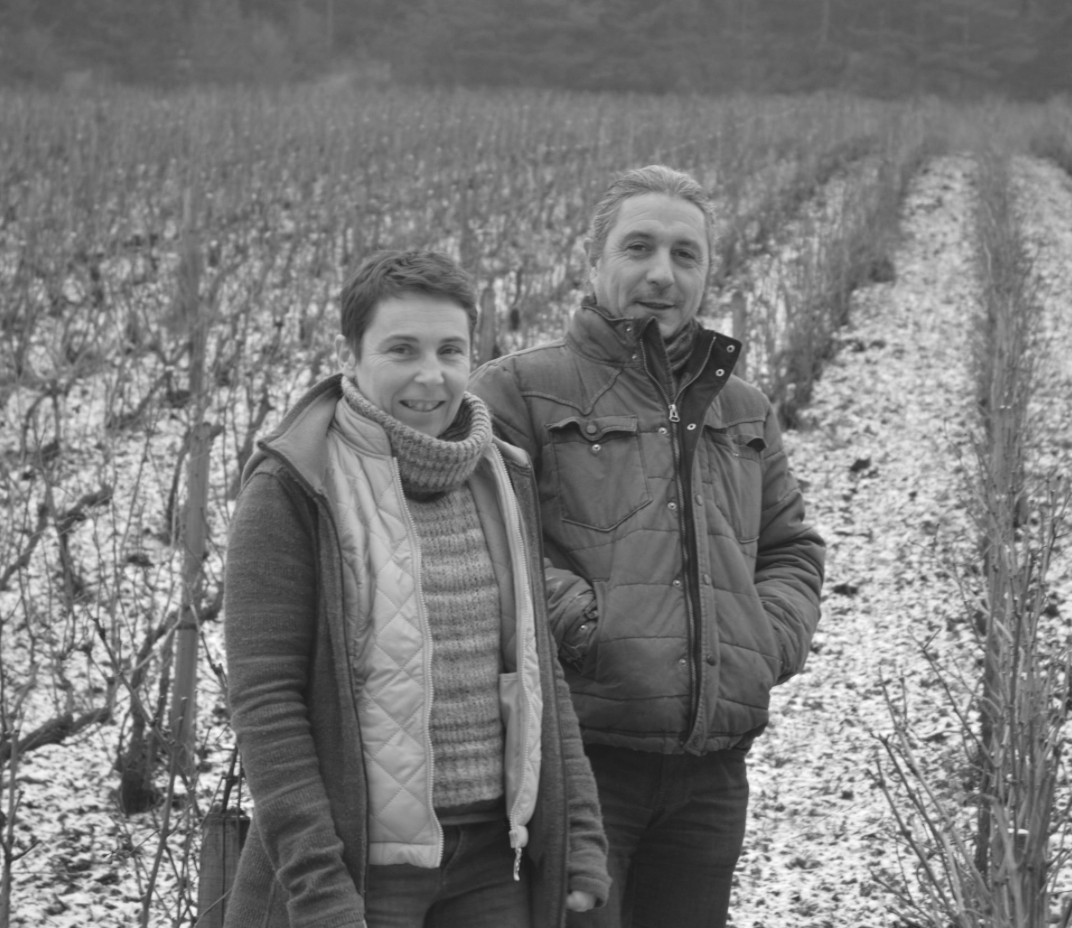
Photo Credit: Paris Wine Company
Champagne Piollot | Roland Piollot + Dominique Moreau
Polisot | France
Roland Piollot and Dominique Moreau are committed Champagne producers who prioritise soil health and sustainable viticulture. Both own and manage their own vineyards near Polisot, producing distinct Champagnes while sharing knowledge and support. Their collaborative approach strengthens vine care and ensures high-quality fruit for wine production.
Roland focuses intensely on organic composting as part of his transition to biodynamic practices. He prepares long mounds of home-made compost using press residues from harvest, local manure added in January, and a biodynamic preparation applied at the end of winter. All compost ingredients come from within 12 kilometres of Polisot, including straw and sawdust. Roland avoids chemical fertilisers and herbicides, choosing a slow-maturing compost that feeds the soil gradually, promotes even vine growth rather than quick bursts, and retains warmth that the vines benefit from.
Dominique Moreau farms a smaller vineyard but follows the same biodynamic principles, producing limited-quantity Champagnes of exceptional quality. Dominique’s estate is certified organic and biodynamic by Ecocert and Demeter, reflecting rigorous standards in soil management and sustainable farming. Together, Roland and Dominique’s biodynamic methods enhance vine health, terroir expression, and the distinct character of their Champagnes.
Set in a picturesque valley near the ancient city of Troyes, their vineyards enjoy sweeping views and a tranquil riverside environment. The idyllic landscape, with vegetable gardens along the Seine and peaceful waterfowl, complements their natural winemaking philosophy and underlines the regional authenticity of their Champagnes.
The still wines are all vinified with native yeasts and are mostly aged in steel tanks, though a bit of the base wine does go into barrels and foudres. Their rosé is produced in years where the Pinot Noir shows especially great quality, and occasional micro-cuvées also appear from time to time. Bottles are kept on the lees for four to six years and are then disgorged with no dosage.