
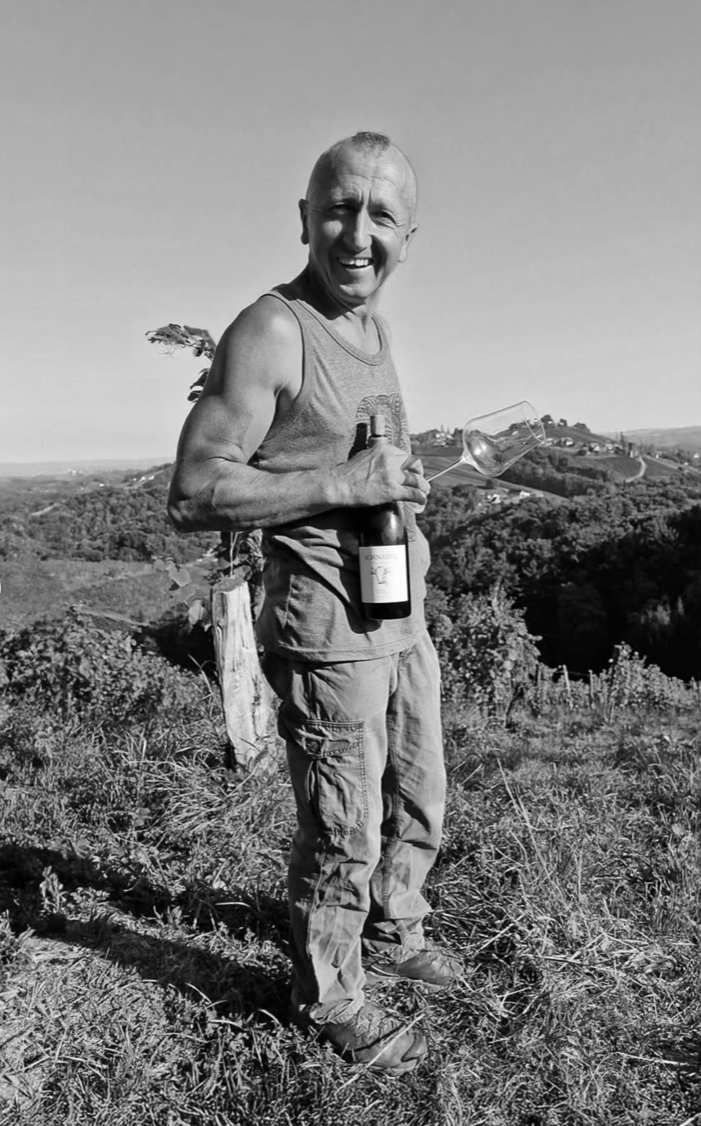
Photo Credit: Instragram
Weingut Schnabel | Karl + Eva Schnabel
Styria | Austria
Karl and Eva Schnabel farm five hectares of biodynamic vineyards on the Sausal hill in Styria, southern Austria. Known for their commitment to organic and natural agriculture, the Schnabels produce wines that are expressive, mineral-driven, and deeply reflective of their unique hillside terroir. Their wines showcase the character of Styria while highlighting the couple’s dedication to sustainability, biodiversity, and precision farming.
Karl grew up on the Sausal hill and has worked with the land for most of his life. Coming from a family involved in cattle farming, he continues to operate a closed-circuit farming system where his small herd plays a vital role in maintaining vineyard health. Karl, Eva, and their three sons live in the family home that once served as an inn and dance hall, a space that still radiates the warmth and energy of its past.
Both Karl and Eva gained valuable experience working in Burgundy during 1997 and 1998, and they completed formal viticultural education in Vienna. Since 2003, their vineyards have been certified biodynamic, and from 2007 onward, every wine they produce has been made without added sulphites. As members of Les Vins S.A.I.N.S., Karl and Eva are recognised as some of the most knowledgeable and enthusiastic proponents of organic and biodynamic winemaking in Austria.
The Sausal hill offers fascinating terroir. Rising dramatically from the plains and rolling countryside near Gleinstätten, the hill is a former island formed roughly 300 million years ago. The soils are loose, stony, and composed mainly of quartz, flint, and silica, with very little clay or limestone. This composition gives the wines a distinctive mineral presence, making them truly reflective of their environment. Karl farms three separate parcels across the hill, planted with a mix of Riesling, Morillon (Chardonnay), Zweigelt, Blaufränkisch, and Pinot Noir.
Visitors to the Schnabel vineyards quickly see Karl’s extraordinary expertise and passion for natural agriculture. He employs a holistic approach, using herbs like nettle and horsetail, encouraging biodiversity, and leveraging the mineral-rich soils to maintain vineyard health. Snakes are welcomed to control pests naturally, grass is left uncut to sustain compost cycles, and remedies for common vine ailments are sourced directly from the vineyard itself. This meticulous care results in thriving vines and exceptional fruit.
Karl and Eva’s winemaking is equally attentive. Grapes are hand-selected in the vineyard, destemmed, and fermented in tank before spending a year in old barrels. The result is wines that are balanced, vibrant, and pure, with native yeast fermentations ensuring healthy, expressive wines. Even cleaning in the winery is done using only local water, reflecting their sustainable ethos.
In addition to their own parcels, Karl has also crafted two cuvées from a friend’s Sauvignon Blanc vineyard near the Slovenian border. Planted on younger calcareous soils, these wines are less mineral but display a more concentrated and direct acidity, offering a complementary style to the Schnabels’ signature Sausal hill expressions.